Crowdsourcing in cultural heritage: balancing productivity and engagement

In October 2017 I went to Université d’Angers, France, for a conference on Le crowdsourcing pour partager, enrichir et publier des sources patrimoniales / Crowdsourcing as a means to share, enrich and public heritage sources.

My abstract: Ideally, cultural heritage crowdsourcing projects enable participants to explore new interests that arise as they encounter historical and scientific collections, but they must also be able to justify the resources required to run projects designed to enhance collections. This can put pressure on projects to focus on productivity at the expense of enjoyment. Beginning with an overview of successful crowdsourcing projects that introduces typical tasks and project types, this talk will discuss the tensions between designing for productivity – the number of items processed and rate of data production – and public engagement.

Historical thinking in crowdsourcing and citizen history projects

In October 2017 I went to DC for a conference 'Creating Historical Knowledge Socially: New Approaches, Opportunities and Epistemological Implications of Undertaking Research with Citizen Scholars' at the German Historical Institute.

Two conference reports, one by Patrick Manning and the other by Matthew Hiebert for the GHI provide more information about the discussions there.

My abstract: This 20-minute presentation examines the extent to which crowdsourcing and 'citizen history' projects and discussion platforms enable and encourage the practice of historical thinking. It takes the definitions of historical thinking set out by scholars and institutional bodies and the American Historical Association's 'core competencies' for students in history courses and degree programs as cues for an extensive trace-ethnographic analysis of participant discourse on crowdsourcing and digital community history platforms. This analysis found evidence for the development of historical thinking, situated learning and collective knowledge creation through participation in online communities of practice. Crowdsourcing project forums support many of the behaviours considered typical of communities of practice, including problem solving, requests for information, seeking the experience of past behaviours, coordinating actions, documenting shared knowledge and experiences, and discussing developments. This paper draws on research undertaken for my 2015 PhD, Making digital history: The impact of digitality on public participation and scholarly practices in historical research, in which I explored the ways in which some crowdsourcing projects encourage deeper engagement with history or science, and the role of communities of practice in citizen history.
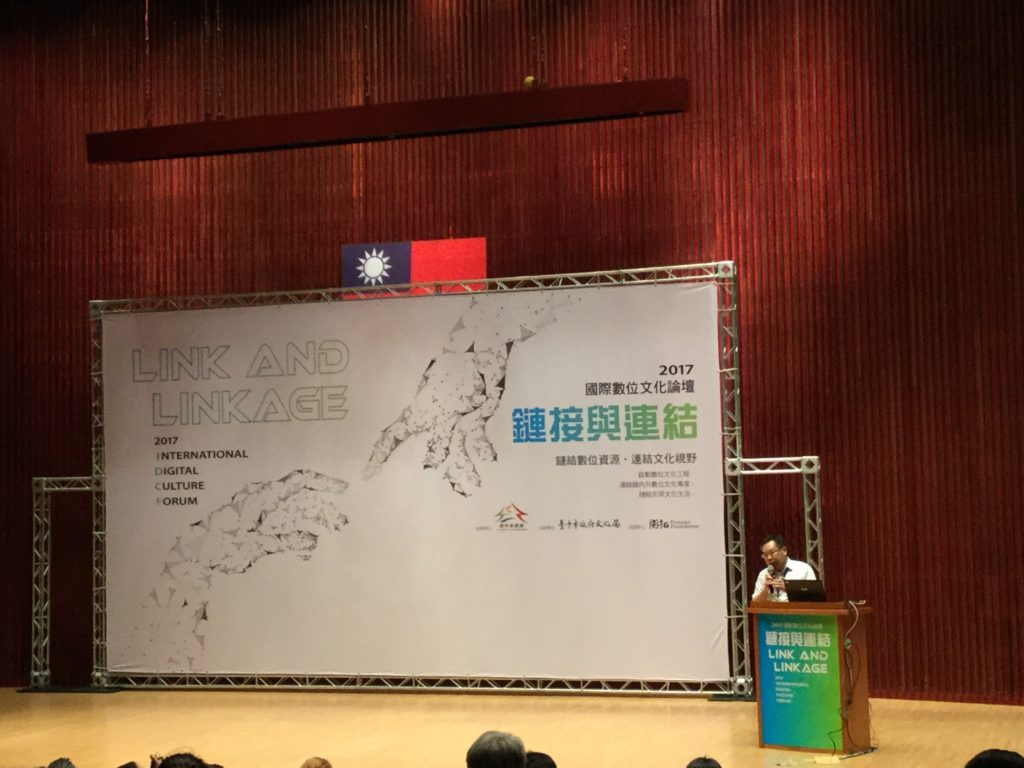
Conference presentation: How should Cultural Institutions Open and Connect Data?

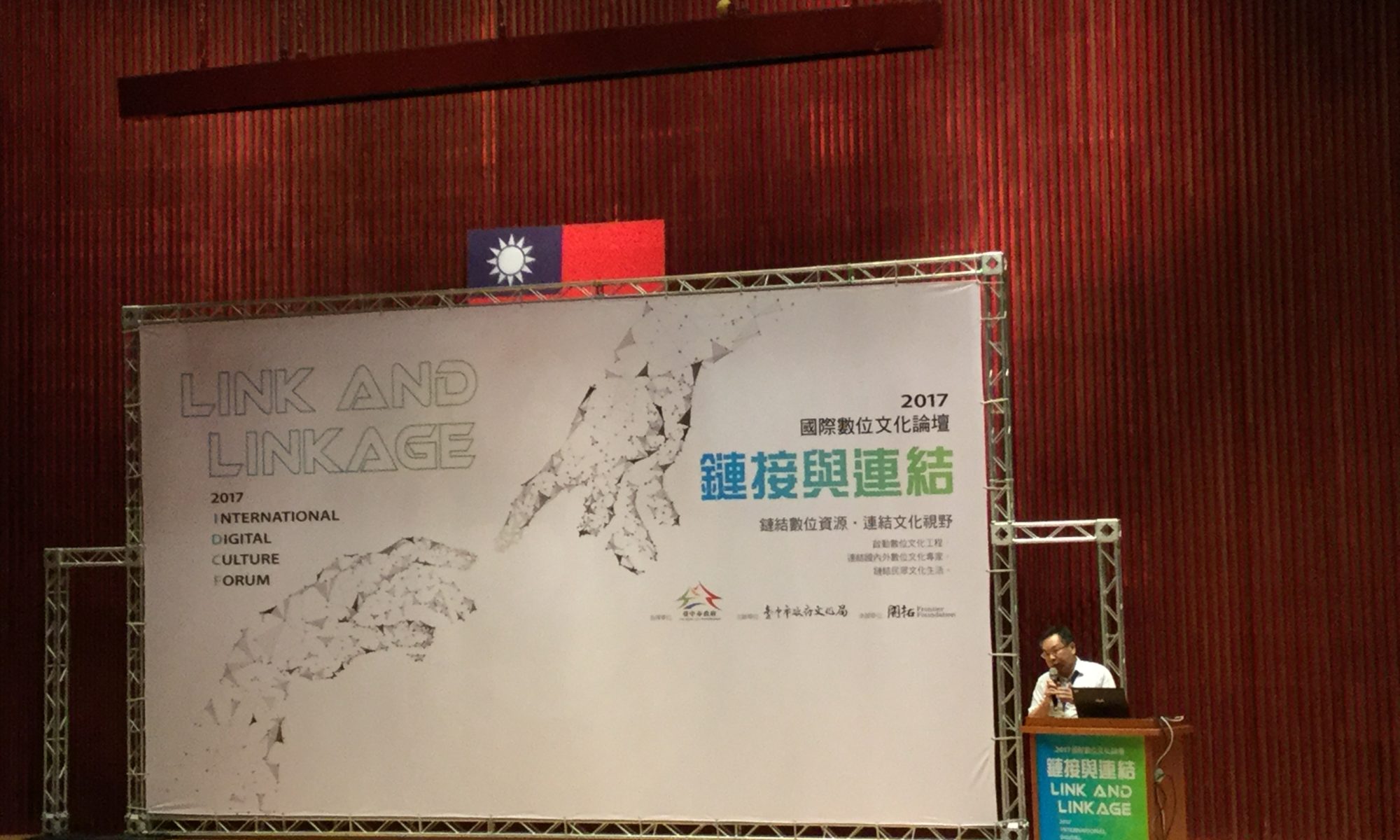
I was invited to Taichung, Taiwan to present at Link and Linkage: 2017 International Digital Culture Forum on 'Connected heritage: How should Cultural Institutions Open and Connect Data?'.

From my opening note: 'I will approach the question by describing the mechanisms organisations have used to open and connect data, then I will look at some of the positive outcomes that resulted from their actions. This is not a technical talk about different acronyms, it's about connecting people to our shared heritage.'

As I had to prepare speaker notes for the translators, I'm able to share my notes with you: Connected heritage: How should Cultural Institutions Open and Connect Data?

Taichung City Government CIO, Ching-Teng Hsiao's closing remarks

Save

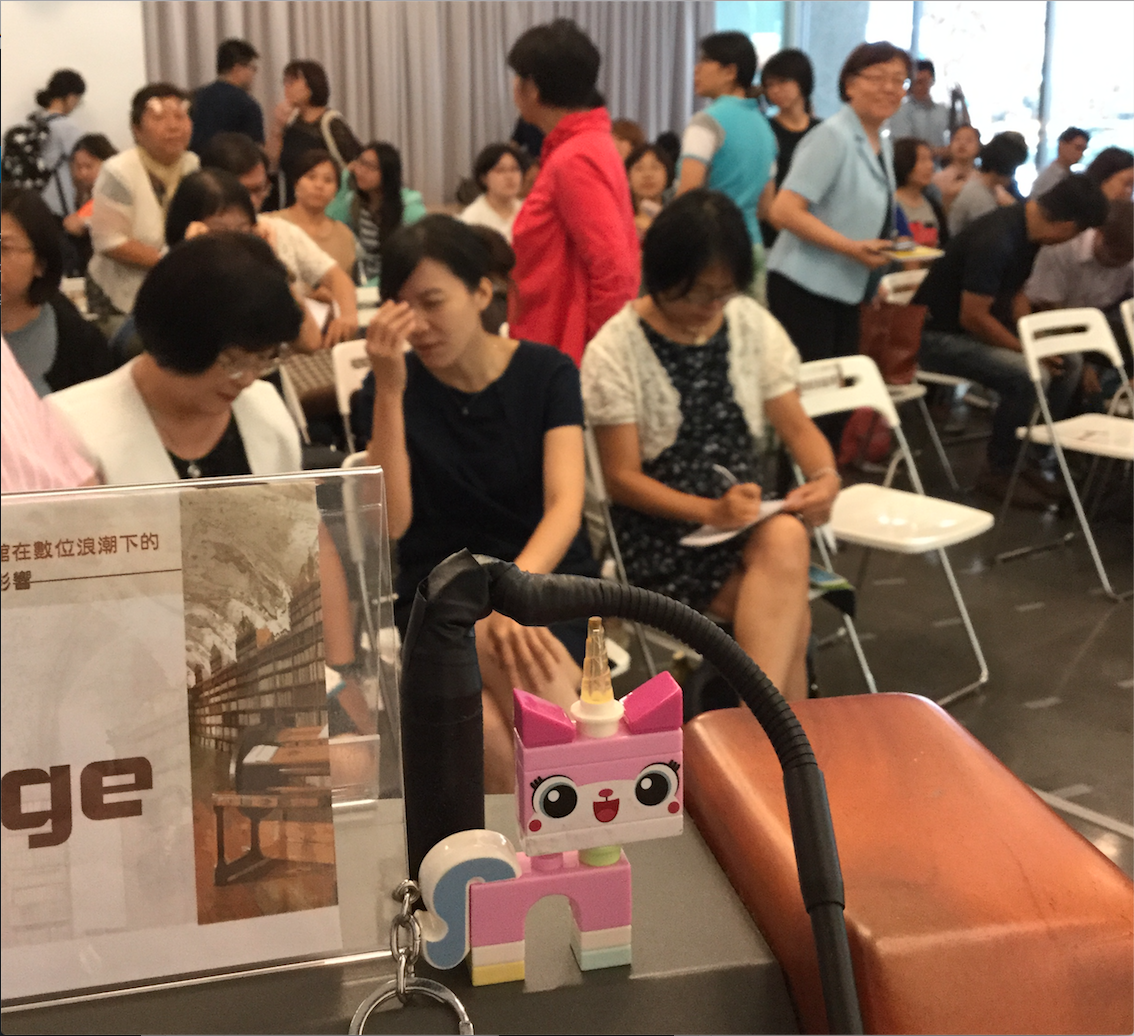
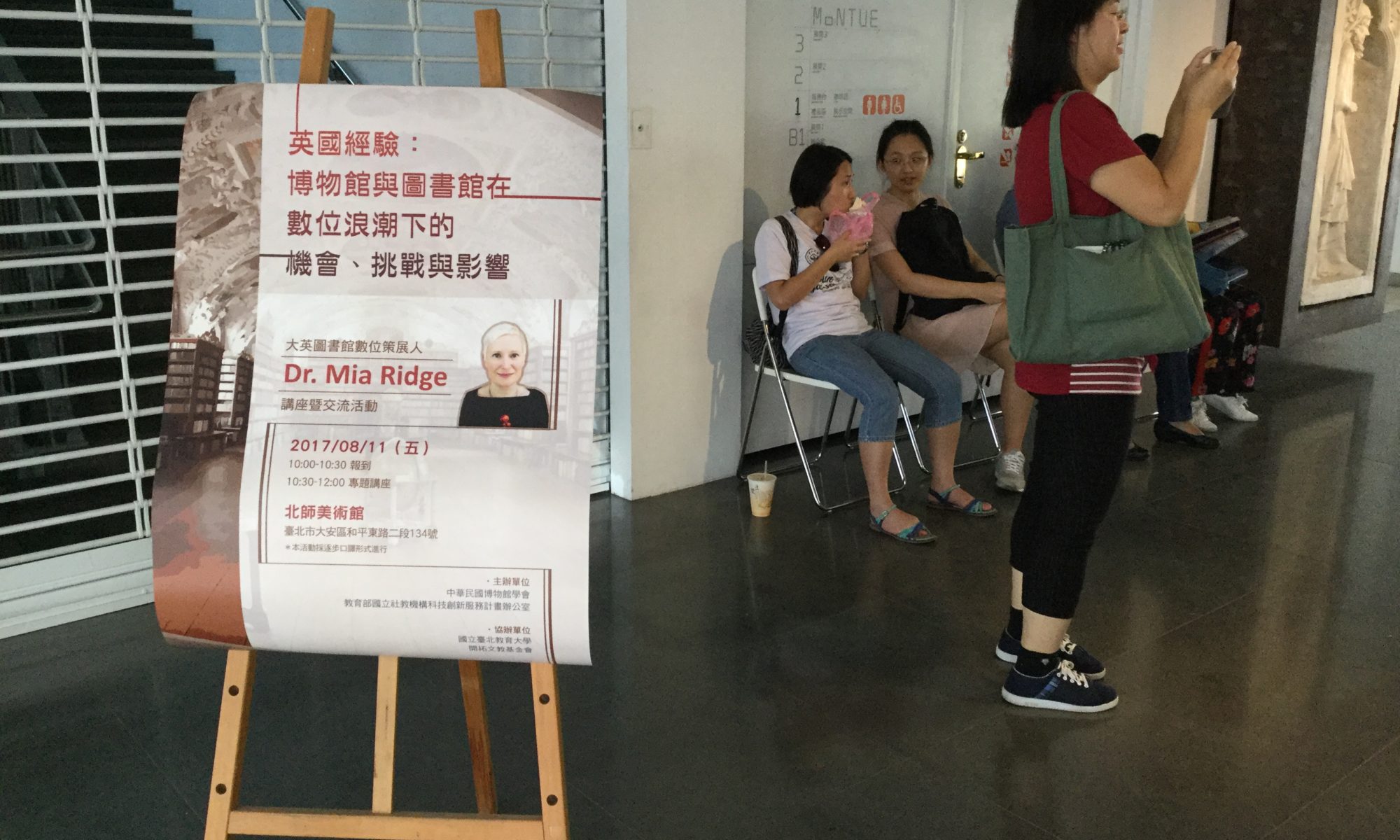
Conference presentation: Crowdsourcing in libraries and museums: Challenges, opportunities and digital impacts

I was invited to do a presentation for a conference organised by the Chinese Association of Museums in Taipei, Taiwan. I gave a version of 'Crowdsourcing in libraries and museums: Challenges, opportunities and digital impacts' tailored for their audience.

Abstract:

Crowdsourcing in museums and libraries involves asking the public to help with tasks that contribute to a shared, significant goal or research interest related to cultural heritage collections or knowledge. This talk will introduce some key examples of successful crowdsourcing projects that have transcribed, categorised, linked and researched millions of cultural heritage and scientific records, and discuss some of the reasons for their success. Digital technologies have enabled exciting new forms of public participation in cultural heritage and the sciences, but they can also challenge museums, libraries and archives to manage the changes that these new opportunities bring. Audience expectations have changed as social media and digital technologies have encouraged greater organisational transparency, and more flexible digitisation and information management practices. How can museums and libraries work with the public to make collections more accessible while making room for people to explore and enjoy collections in new ways?

Conference presentation: Cross-sector collaboration on digital museum and library projects

I was invited to do a presentation for a 'VIP workshop' for the Chinese Association of Museums in Taipei, Taiwan. They asked me to talk about 'Cross-sector collaboration on digital museum and library projects'.

In my talk, I discussed collaboration through:

  • MCG, MCN: informal support through practitioner groups
  • Culture24's Let's Get Real: action research
  • Finland100, BnF: selective digitisation
  • Sharing audience data: MHM, Audience Agency segments
  • UK Libraries taskforce
  • Sector-wide approach: DCMS #CultureIsDigital
  • Europeana – international collaboration on shared infrastructure

As I had to make extensive notes on my slides for the translator, I'm able to share my slides with notes: https://www.miaridge.com/wp-content/uploads/CAM-afternoon-Taiwan-2017-Collaboration-M-Ridge.pdf

The talk lead to some wide-ranging discussion and gave me the opportunity to hear from several directors of Taiwanese national museums and libraries.

Save