I was invited to give a talk on '' for the School of Advanced Study, University of London 'Social Scholar' seminar series in October 2015.
Cultural heritage technologies, user experience design and research, digital humanities
I was invited to give a talk on '' for the School of Advanced Study, University of London 'Social Scholar' seminar series in October 2015.
I gave a presentation on 'Choosy crowds and the machine age: challenges for the future of humanities crowdsourcing' at Kings College London for Citizen Humanities Comes of Age: Crowdsourcing for the Humanities in the 21st Century (9th – 10th). This lead to a co-authored publication, Citizen Humanities Comes of Age: Crowdsourcing for the Humanities in the 21st Century Event Summary.
Some of the points I raised are discussed in 'How an ecosystem of machine learning and crowdsourcing could help you' and 'Helping us fly? Machine learning and crowdsourcing'.
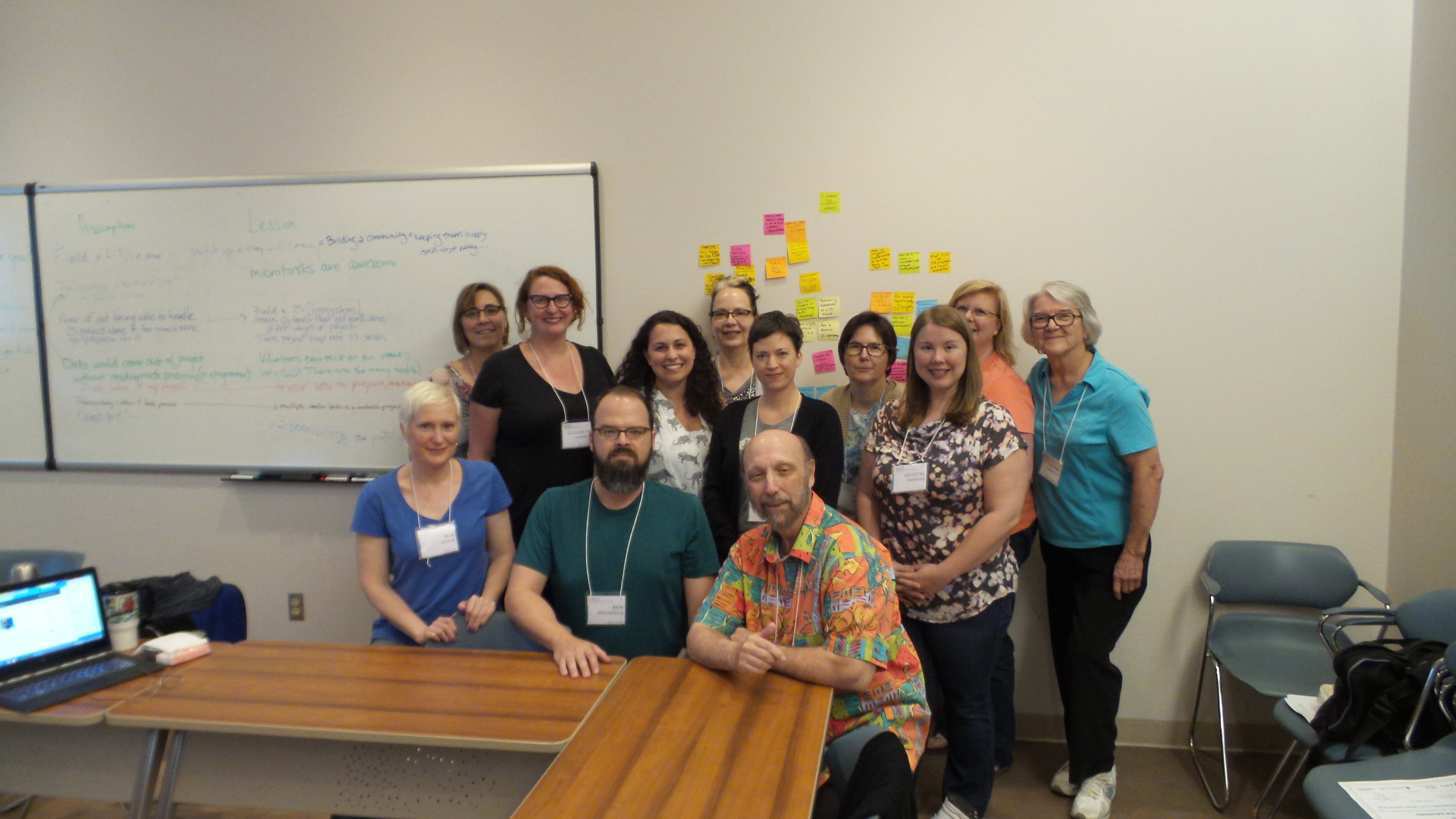
Resources for the course on Crowdsourcing Cultural Heritage at HILT 2015 I'm teaching with Ben Brumfield.
Course Google Doc for collaborative note-taking, links, etc.
Flickr Group for HILT 2015 Crowdsourcing photos
Mia's storify of the week and the class presentation for the HILT Show and Tell.
Well done @cmderose_wisc @nebrown63 @ElizHansen @ESPaul @vac11 @kmthomas06 @WendyJ1226 @HistorianOnFire @Jim_Salmons @TimlynnBabitsky + Nancy!
HILT Crowdsourcing Slides and Exercises for Monday
Session 2: links to find a project you love! For non-English language projects, try Crowdsourcing the world's heritage.
Prompts for thinking about projects:
http://tinyurl.com/EminentScotsmen
Continue reading "HILT Summer School 2015: 'Crowdsourcing Cultural Heritage'"
I presented a paper, 'Small ontologies, loosely joined': linked open data for the First World War, in a panel on Linked Open Data and the First World War at Digital Humanities 2015 (based on my experiences as a Fellow at Trinity College Dublin working on histories of World War One with the CENDARI project).
I've been asked to give a workshop on Information Visualisation for the CHASE Arts and Humanities in the Digital Age training programme in June 2015.
The workshop will introduce students to the use of visualisations for understanding, analysing and presenting large-scale datasets in the Humanities, enabling scholars to ask increasingly complex research questions.
Slides, sample data and instructions for exercises are downloadable here: CHASE InfoVis Handouts 2015.
Links for the various exercises are collected below for ease of access.
Books
Newspapers
Google Fusion Tables: https://www.google.com/fusiontables/data?dsrcid=implicit
An Excel version of this exercise is available at https://www.openobjects.org.uk/2015/03/creating-simple-graphs-with-excels-pivot-tables-and-tates-artist-data/
Google Fusion Tables: https://www.google.com/fusiontables/data?dsrcid=implicit
Explore more visualisations:
Sketch ideas for visualisations:
Try visualising data in different tools:
Try visualising existing data